
How should you write an ATS resume for career changes or gaps?
An ATS resume for a career change or employment gap should keep an accurate timeline while making relevant skills easy to find. Use familiar headings, explain transferable work with concrete evidence, and label projects or training honestly. No format can guarantee how an applicant tracking system (ATS), the software employers use to manage applications, or a recruiter will assess a nontraditional history.
Start with a specific target role
Read what the opening actually asks you to do. Identify the required qualifications, relevant tools, and responsibilities, then compare those with your work, training, and projects. “Career change” is broad; the evidence needed for IT support differs from the evidence needed for accounting or operations.
A required license or credential may need to be obtained before you qualify. A transferable skill can help explain your fit, but it does not replace a mandatory qualification. Distinguish missing wording from an experience or eligibility gap.
Translate the work without changing its facts
A retail supervisor may have resolved customer problems, trained colleagues, or documented processes. Those actions can support a move toward customer support or operations. Explain what you did in language the new role can understand while preserving the actual employer, title, and dates.
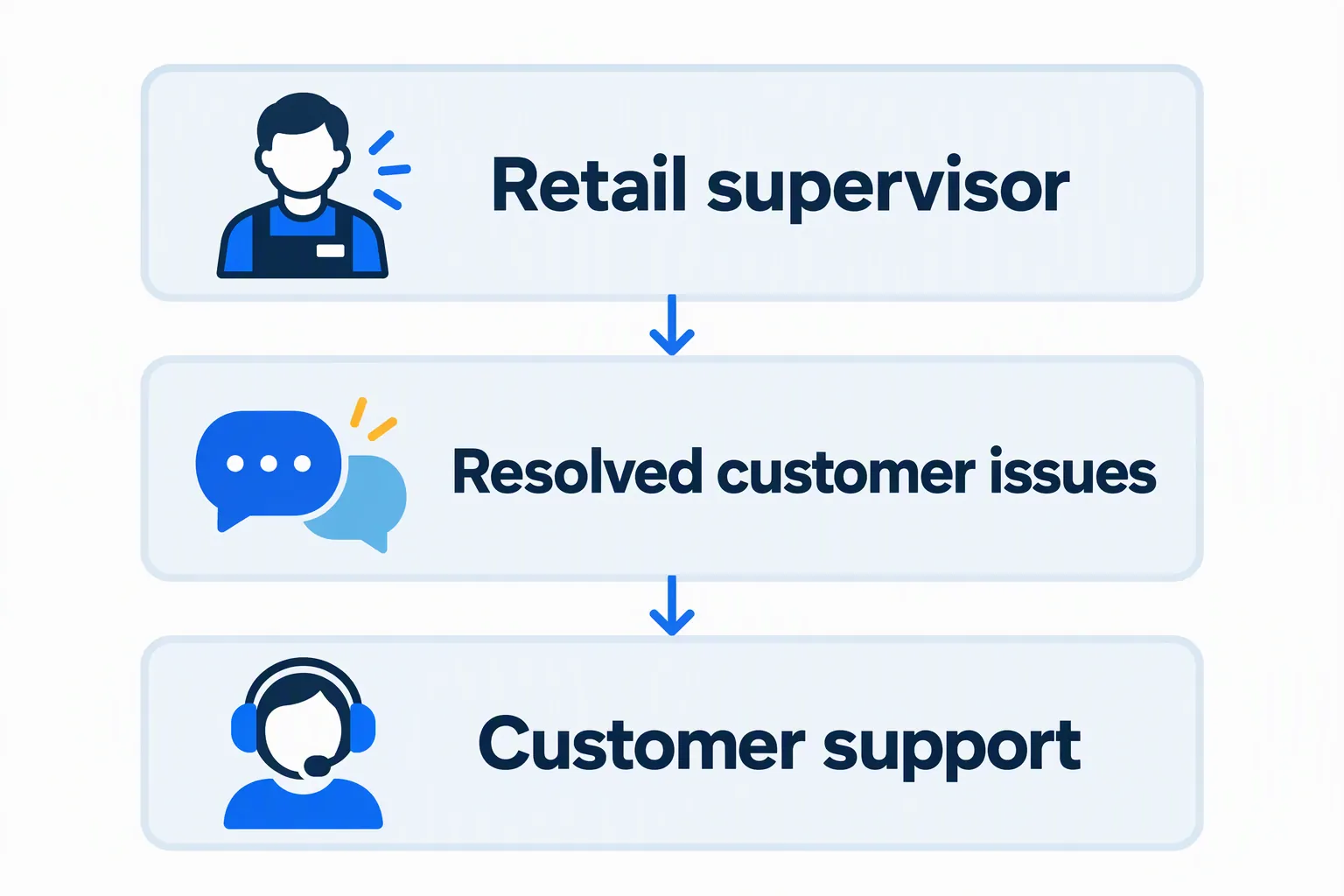
Do not relabel a prior role with the target job title. “Customer support experience in retail” may be truthful; calling the same role “IT Support Specialist” would imply experience you have not established. A brief description can clarify an unusual internal title without replacing it with a false one.
Fictional example: make transferable work visible
Retail Supervisor. Managed daily store operations.
Retail Supervisor. Resolved customer order issues, documented follow-up, and trained new colleagues on escalation procedures.
The revision selects concrete support-related work from the real role. It does not claim software troubleshooting, a new credential, or a different job title.
Harvard’s resume guidance recommends matching the evidence to the position rather than requiring every past experience to be directly related. Use that principle to choose relevant contributions without pretending your whole career already belongs to the new field.
Keep a clear timeline when there is a break
Use consistent, accurate dates for work and other dated entries. A short, neutral “Career break” entry can explain a period if that helps the reader understand the timeline. You can describe the context briefly without disclosing sensitive medical or family details.
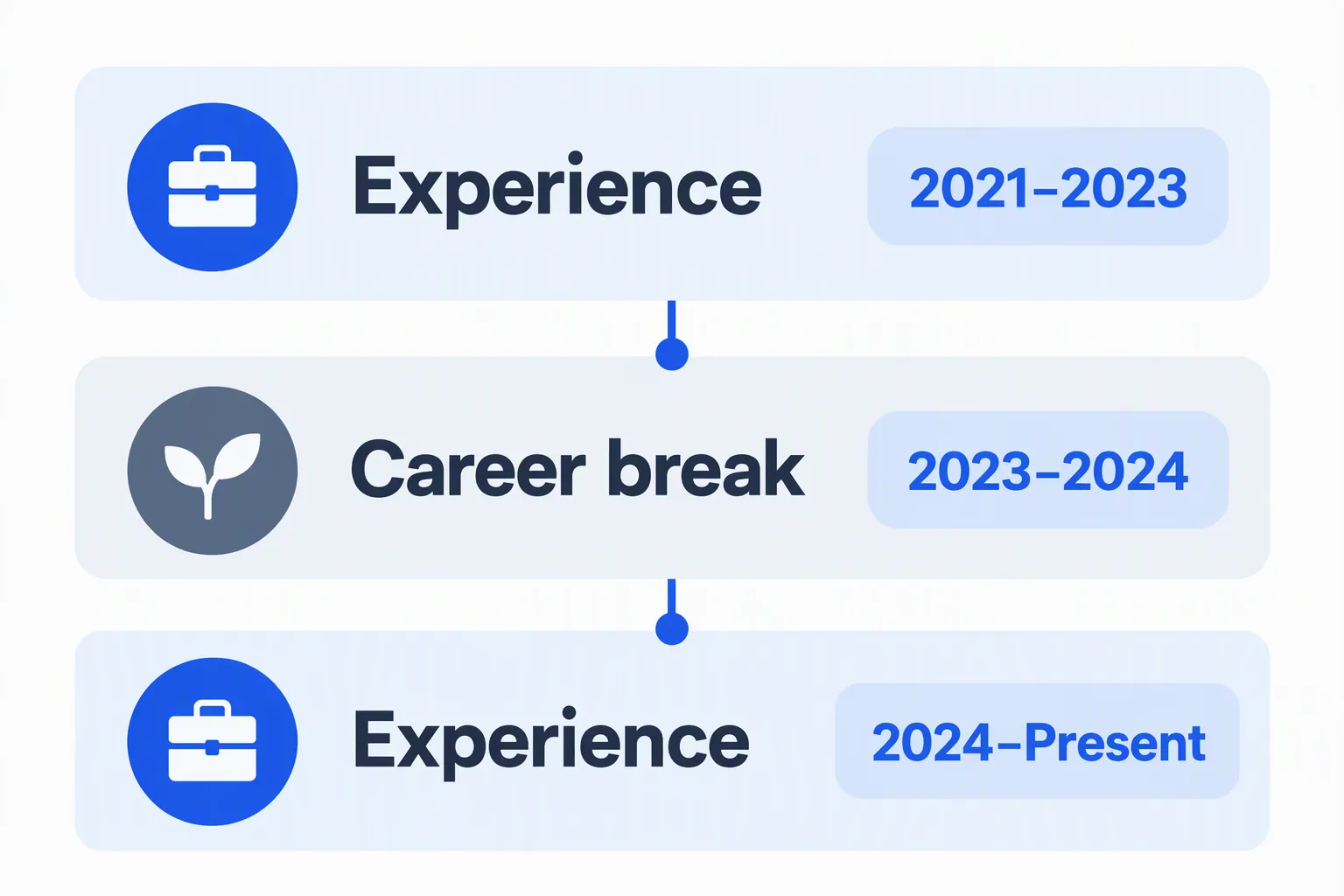
The illustration uses years to explain the concept; for your own entries, choose a consistent date format with enough detail for the application. If the form asks for months, provide the actual months. Do not extend an old role or invent consulting work to fill the space.
Choose a structure that shows skills and chronology
A single-column resume with familiar headings is a practical default. You can place a focused summary, relevant Skills, or Projects near the top, then include Experience and Education with clear dates. Bringing evidence forward does not require removing the work history.
A skills-only format can make it harder to see where and when you used a capability. A combination approach can highlight relevant skills while retaining the timeline, but avoid repeating the same bullet in several sections. Choose the structure that lets a reader connect claims with their source.
Greenhouse identifies unclear sections and complex layouts as possible parsing problems. That supports clear headings and grouping, not a rule that every career gap or particular resume format causes rejection. Software and employer workflows vary.
Label training, projects, and volunteer work honestly
A recent course or project can provide relevant evidence when paid experience is limited. State the setting, what you built or practiced, and the tools involved. Use a heading such as Projects or Volunteer Experience when it makes the nature of the work clear.
Fictional example: label new technical evidence
Data Analyst. Professional Python experience.
Personal data project. Used Python to clean a public transit dataset and summarize missing values for a written analysis.
This fictional revision labels the activity as a personal project rather than inventing an employer or professional role. Add the actual project dates and scope when appropriate.
List a completed certification accurately. If a program is in progress, say so and use an expected completion date only when it is reasonable. Attending part of a course does not establish a credential or professional proficiency.
Learning during a break can be worth mentioning, but a period of caregiving, recovery, or job search does not need a fabricated productivity story. Include relevant activities that happened; leave out a course or project you did not complete.
Use keywords as labels for supported experience
Name relevant tools and skills when you can explain them. For example, a customer-facing role can support communication and issue resolution, but it does not automatically establish experience with a specific ticketing platform. Keep the distinction visible.
Review what the checker can and cannot assess
This checker extracts PDF text and reviews content, with job comparison when you provide a description. It cannot determine why an employer responded or how a career break will be viewed. Its content score also does not measure the original fonts or columns.
Verify any dates and role details the report quotes. A score is not a judgment of the value of your career path. Use the report-reading guide to choose practical fixes without chasing a number.
Review your transition resume
- Choose a target role and check its actual required qualifications.
- Show transferable actions while preserving real titles, employers, and dates.
- Keep the chronology clear and any break explanation brief and accurate.
- Label projects, volunteer work, training, and credentials honestly.
- Review extracted information and application answers before submitting.
Your next step
An ATS resume for a career change or gap should help a reader connect real experience with the next role. Keep the timeline honest, explain transferable work, and show new learning without overstating it.
Run the free ATS resume check to review your PDF before applying. For more on presenting projects and early experience, read Democruit’s guide to resumes with no experience.
Sources and product behavior checked October 4, 2026. Illustrations and worked examples are fictional; employer systems and requirements vary.
Frequently asked questions
Should I hide an employment gap by removing dates?
Keep dates accurate and follow the application’s requirements. You can bring relevant skills forward without hiding the timeline, and a brief neutral break entry may help when useful.
Can I change my old title to match the new career?
Keep your actual title. Explain relevant responsibilities or clarify an unusual internal title with a truthful description rather than claiming the target role as past employment.
Can personal projects count as resume evidence?
Yes, when relevant and clearly labeled. Describe the tools, actions, and output without presenting the project as paid professional experience or an unearned credential.
Does ATS automatically reject career gaps?
This guide cannot establish a universal rule about gaps. Employer workflows vary, and a checker cannot reveal how a particular employer will assess your history; focus on accurate dates and clear evidence.