
Which standard resume section headings should you use?
Use standard resume section headings such as Experience, Skills, and Education to make the document’s structure clear. Familiar labels help people and can help an applicant tracking system (ATS) organize information, but no heading guarantees recognition by every parser. Choose sections that fit your actual background rather than adding empty sections to satisfy a template.
Give each section an explicit name
“Experience” tells the reader to expect roles and work history. “Skills” introduces capabilities or tools. “Education” introduces schools, programs, and degrees. A creative label such as “My journey” may be understandable in context, yet gives software and a hurried reader less direct information.
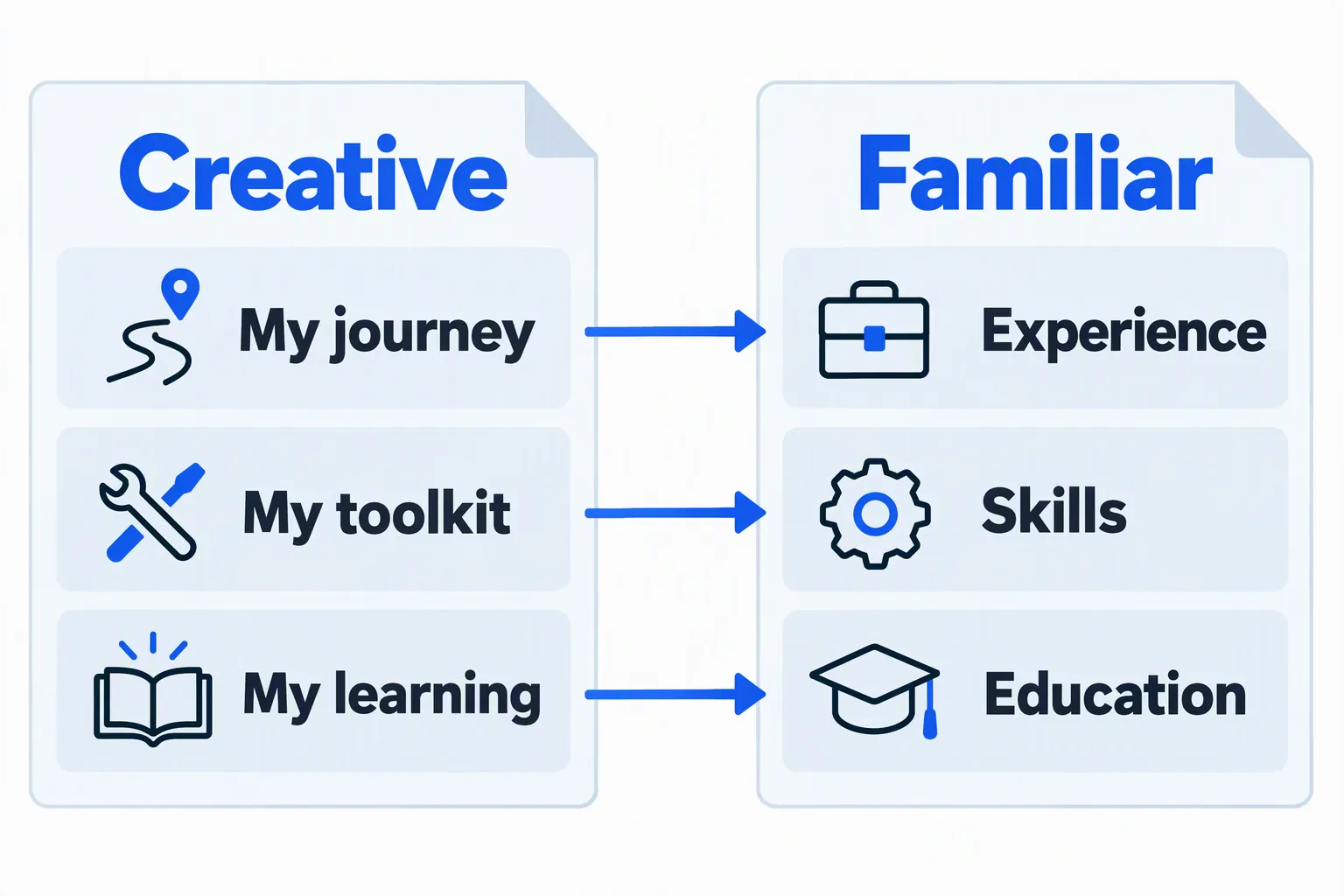
Greenhouse lists unclear resume sections among possible parsing problems. That supports choosing clear labels as a precaution, not a claim that every unusual heading causes rejection. See the guide to ATS rejection myths for the difference between parsing and screening.
Choose headings that describe the content
| Heading | What belongs there |
|---|---|
| Experience or Work Experience | Roles, employers, dates, and contribution bullets |
| Skills or Technical Skills | Relevant capabilities and named tools |
| Education | Degrees, institutions, and relevant study |
| Projects | Clearly labeled personal, academic, or other project work |
| Certifications | Relevant credentials and their accurate status |
| Volunteer Experience | Volunteer roles with enough context to understand the work |
These are practical labels, not a complete list approved by every ATS. “Professional Experience” can describe work history; “Relevant Experience” can group work most connected to the target role. Make the actual entries clear enough that the heading is not doing all the explanatory work.
Put headings on their own lines
Use a separate line for the heading, then place the entries beneath it. Keep its size, weight, and spacing consistent with other section headings. Do not replace it with an icon or insert spaces between every letter to create a decorative effect.
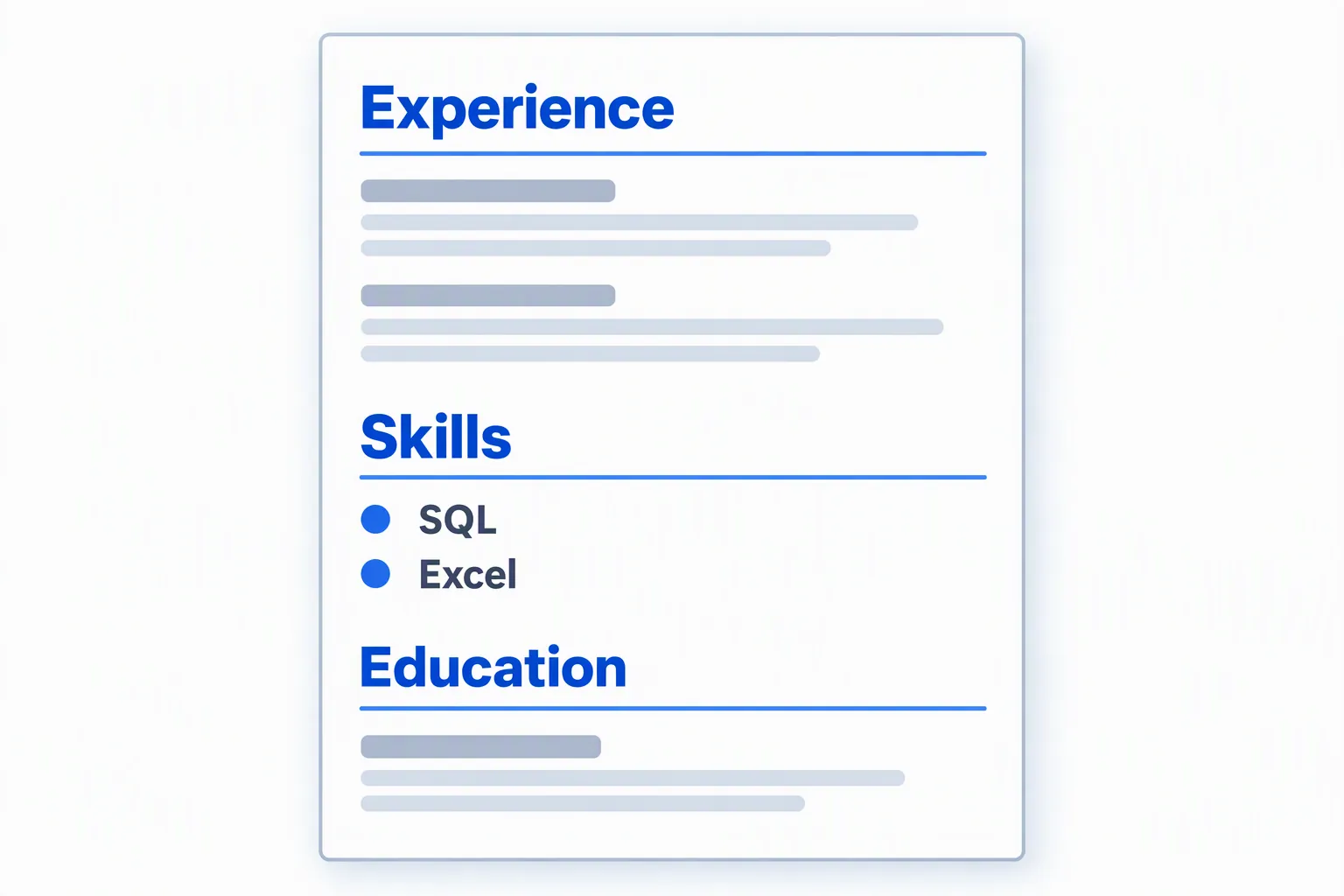
Dates, titles, and school names need their own clear relationships too. A heading can mark the start of Experience while the entries below still become confusing if dates sit in a separate column or employers are missing.
Illustrative revision: clarify the label
My toolkit: SQL, Excel, Tableau.
Skills SQL, Excel, Tableau.
The fictional revision changes the heading and separates it from the content. It keeps the same skills; it does not make a claim about the candidate’s proficiency.
Order sections by useful evidence
You do not need one universal section order. A recent graduate might place Education or Projects before a short work history. An experienced applicant may lead with Experience. A career changer can bring a relevant project forward while keeping an accurate employment timeline.
Harvard’s resume guidance recommends ordering headings by importance and making the resume easy to follow. Use relevance to decide what the reader should find first, then keep the labels familiar.
Review a checker warning in context
This site’s separate local text checks recognize common heading patterns; they do not understand every valid variation. A missing-heading warning can reflect wording or extracted line breaks. It does not prove the section is absent or that an employer will reject the resume.
Keep truthful content and review the original file. Add or rename a section when that improves clarity, not simply to make every label turn green. A score cannot verify the accuracy or value of the information beneath a heading.
Your next step
Standard resume section headings work best when they describe real content and appear above well-organized entries. Keep the labels clear, choose the order by relevance, and review warnings against the actual document.
Run the free ATS resume check to review your PDF before applying. For more on arranging your work history, read Democruit’s guide to resume formats.
Sources and product behavior checked October 4, 2026. Illustrations and worked examples are fictional; employer systems and requirements vary.
Frequently asked questions
Are Experience, Skills, and Education mandatory?
Use these headings when the sections apply to your background. Do not invent content or leave an empty section just to satisfy a pattern check.
Can I use Professional Experience instead of Experience?
Yes, when it accurately describes the section. Familiar variations can be clear, but no wording guarantees every parser will recognize it.
Will a creative heading get my resume rejected?
A creative label may make the section harder to classify, but that does not establish automatic rejection. Prefer an explicit heading and review the application fields for missing information.